vista ridge logo

Exposed Tooth Roots: Causes, Symptoms, and Treatment Options

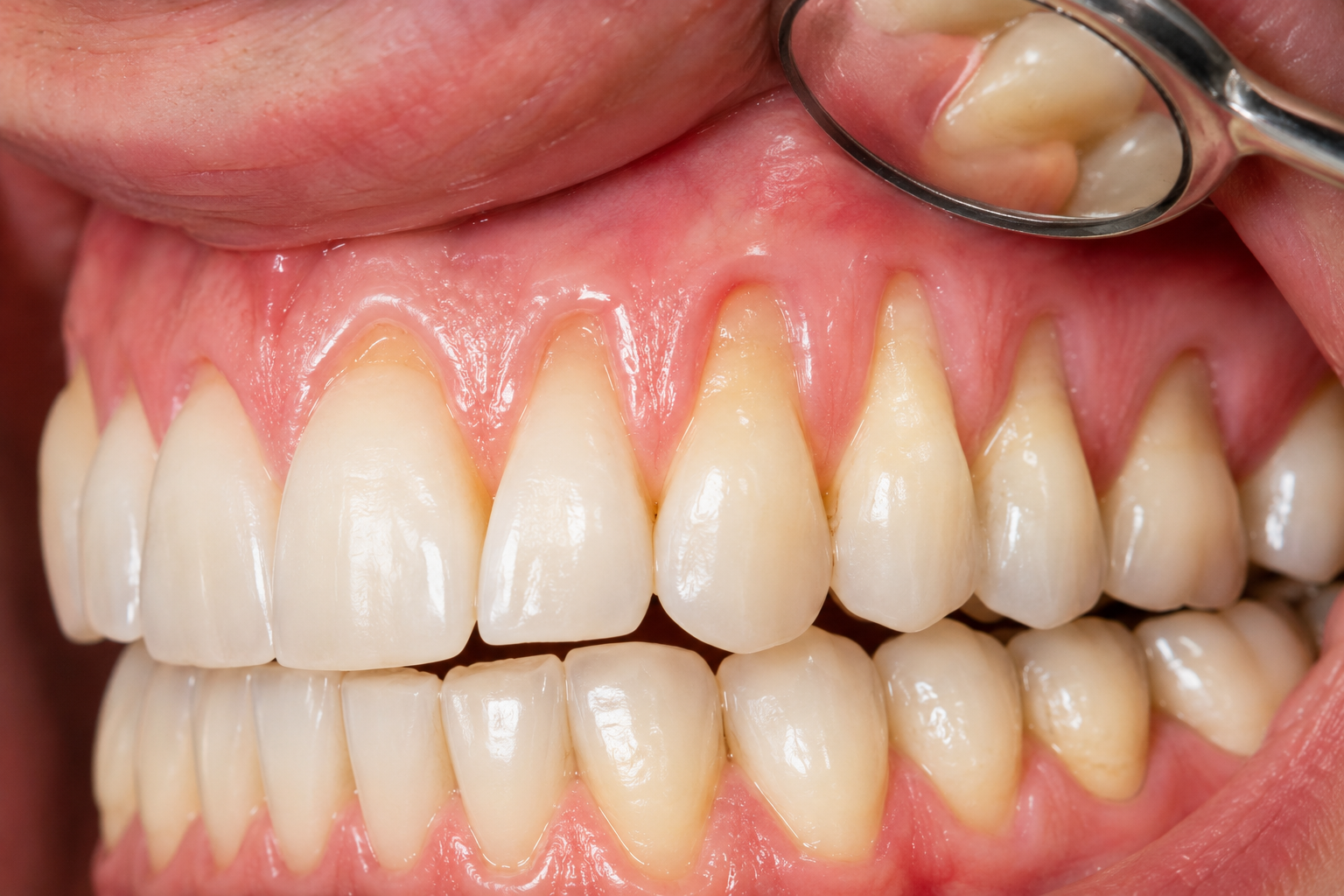
Close-up of exposed tooth roots and gum recession during a dental examination with mirror

Exposed tooth roots occur when gum tissue recedes and reveals the lower portion of the tooth, increasing sensitivity and vulnerability. At Vista Ridge Dental, evaluation may include preventive and restorative options through general dentistry to protect affected teeth and address underlying causes.

Exposed roots may affect comfort, function, and long-term tooth stability if not managed properly.

Quick Fact Block

  • What it is: Exposure of tooth roots due to gum recession
  • Who it is for: Patients with sensitivity or visible gum changes
  • Main benefits of treatment: Reduces sensitivity and protects tooth structure
  • Limitations: Depends on severity and underlying cause
  • Timeline: Improvement varies by treatment type

What Causes Exposed Tooth Roots?

Exposed tooth roots develop when gum tissue pulls away from the tooth surface.

Common causes include:

  • Gum recession → loss of protective tissue
  • Aggressive brushing → enamel and gum wear
  • Gum disease → tissue breakdown
  • Teeth grinding → pressure along the gumline

Progression Path

  • Gum irritation → inflammation
  • Tissue breakdown → recession
  • Root exposure → sensitivity and risk

If the underlying cause is not addressed, then exposure may continue to worsen over time.

What Causes Gum Recession to Progress Over Time?

Gum recession may worsen when underlying causes continue without correction.

Even after initial exposure, ongoing irritation or pressure can lead to further tissue loss.

Common Progression Factors

  • Continued aggressive brushing: wears down gum tissue gradually
  • Untreated gum disease: allows bacterial damage to persist
  • Teeth grinding or clenching: places repeated stress on the gumline
  • Poor oral hygiene: increases plaque accumulation near gums

Progression Path

  • Initial recession → increased exposure
  • Continued stress → deeper gum loss
  • Advanced stage → structural and sensitivity issues

If contributing factors are not controlled, then gum recession may continue to progress even after symptoms appear.

Addressing both habits and underlying conditions is essential for long-term stability.

What Symptoms Indicate Exposed Tooth Roots?

Symptoms typically involve sensitivity and visible changes in the gumline.

Common signs include:

  • Sharp pain when consuming hot or cold foods
  • Sensitivity to sweet or acidic foods
  • Teeth appearing longer than normal
  • Visible root surfaces near the gums

If symptoms increase gradually, then gum recession may be progressing.

Why Are Exposed Tooth Roots More Sensitive?

Tooth roots are more sensitive because they lack protective enamel.

Structural Differences

  • Enamel (crown): hard protective outer layer
  • Root surface: softer dentin with microscopic tubules

These tubules allow external stimuli to reach nerve endings more easily.

If dentin is exposed, then sensitivity may increase significantly.

Does Teeth Grinding Contribute to Exposed Roots?

Teeth grinding (bruxism) may contribute to gum recession and root exposure by placing excessive force on teeth and surrounding structures.

How Grinding Affects Gums

  • Repeated pressure → stress on gum attachment
  • Tooth movement → weakening of supporting tissues
  • Enamel wear → increased vulnerability near the gumline

Signs of Grinding

  • Jaw soreness or tightness
  • Flattened or worn tooth surfaces
  • Headaches upon waking

Patients experiencing grinding-related symptoms may benefit from evaluation through services like TMJ care.

If grinding is not managed, then gum recession and sensitivity may worsen over time.

Addressing bite pressure helps reduce strain on both teeth and gums.

Can Exposed Tooth Roots Be Reversed?

Exposed tooth roots cannot always be reversed, but progression may be managed.

Outcomes depend on:

  • Severity of gum recession
  • Underlying cause
  • Treatment approach

If treated early, then further damage may be prevented.

What Does Early Gum Recession Look Like?

Early gum recession often begins with subtle changes in gumline position and sensitivity.

Early Indicators

  • Slight gumline unevenness
  • Mild temperature sensitivity
  • Small notches near the gumline
  • Yellowish root surface visibility

Progression

  • Minor tissue loss → increased exposure
  • Continued irritation → deeper recession

If detected early, then preventive care may slow progression.

How to Treat Exposed Tooth Roots

Treatment focuses on protecting the root and addressing the cause.

Desensitizing Treatments

  • Fluoride applications
  • Desensitizing toothpaste
  • Protective bonding materials

Gum-Focused Treatments

  • Deep cleaning for gum disease
  • Gum grafting procedures

Patients may also explore solutions through preventative dentistry to reduce further damage.

If recession is advanced, then surgical options may be recommended.

Can Exposed Tooth Roots Lead to Cavities?

Exposed roots may increase the risk of root decay due to softer dentin structure.

Risk Factors

  • Plaque buildup near the gumline
  • Acid exposure
  • Reduced protective enamel

Signs of Root Decay

  • Localized sensitivity
  • Discoloration near the gumline
  • Rough tooth surface

If root surfaces remain exposed, then decay risk may increase over time.

Risks of Leaving Exposed Tooth Roots Untreated

Untreated exposure may lead to structural and functional issues.

Potential risks include:

  • Increased sensitivity
  • Higher risk of cavities
  • Gum inflammation
  • Tooth weakening

If left untreated, then long-term damage may occur.

When to See a Dentist for Exposed Roots

Professional evaluation is recommended when symptoms persist or worsen.

When to Seek Care

  • Sensitivity lasting more than 1–2 weeks
  • Visible gum recession increasing
  • Pain during eating or brushing

What May Be Assessed

  • Degree of gum recession
  • Presence of gum disease
  • Tooth structure condition

If symptoms progress, then early evaluation may help prevent further damage.

How Do Dentists Measure Gum Recession?

Dentists evaluate gum recession by measuring how far the gum tissue has moved away from the tooth.

This helps determine severity and appropriate treatment.

Common Assessment Methods

  • Periodontal probing: measures gum pocket depth in millimeters
  • Visual examination: identifies gumline position and symmetry
  • Dental imaging: evaluates bone support around teeth

Severity Classification

  • Mild recession → minimal root exposure
  • Moderate recession → noticeable gum loss
  • Advanced recession → significant exposure and structural impact

If recession depth increases over time, then more advanced treatment may be recommended.

Tracking measurements allows dentists to monitor progression and treatment effectiveness.

Exposed Tooth Roots vs Other Tooth Sensitivity

Not all sensitivity is caused by root exposure.

  • Tooth sensitivity: temporary and triggered
  • Enamel wear: gradual surface loss
  • Gum recession: structural exposure of roots

If sensitivity is persistent and localized, then root exposure may be involved.

How to Prevent Exposed Tooth Roots

Prevention focuses on protecting gum tissue and reducing stress on teeth.

Helpful habits:

  • Use a soft-bristled toothbrush
  • Brush gently along the gumline
  • Maintain regular dental visits
  • Address grinding habits, possibly with TMJ care such as TMJ treatment

If preventive habits are consistent, then gum recession may be reduced.

FAQ

Are exposed tooth roots serious?

They may increase sensitivity and decay risk, depending on severity.

Can toothpaste fix exposed roots?

Desensitizing toothpaste may reduce symptoms but does not restore gum tissue.

Do exposed roots require surgery?

Not always. Treatment depends on severity and progression.

Can exposed roots heal naturally?

They typically do not regrow, but progression may be managed.

What to Do Next

Exposed tooth roots often result from gum recession, brushing habits, or underlying gum conditions, and may lead to increased sensitivity over time. Identifying the cause is important for selecting the appropriate treatment approach.

If you are noticing sensitivity, visible gum changes, or discomfort when eating, the condition may be progressing. If this applies to you, Vista Ridge Dental can evaluate your oral health and recommend preventive or restorative care based on your needs.

To better understand your condition and explore appropriate treatment options, you can request an appointment for a personalized evaluation.

Visit Us Today
Monday:
8:00am - 5:00pm
Tuesday:
8:00am - 5:00pm
Wednesday:
8:00am - 5:00pm
Thursday:
8:00am - 5:00pm
Friday:
Closed
Call (817) 587-4546
logo white vista (1)

Information

Services